
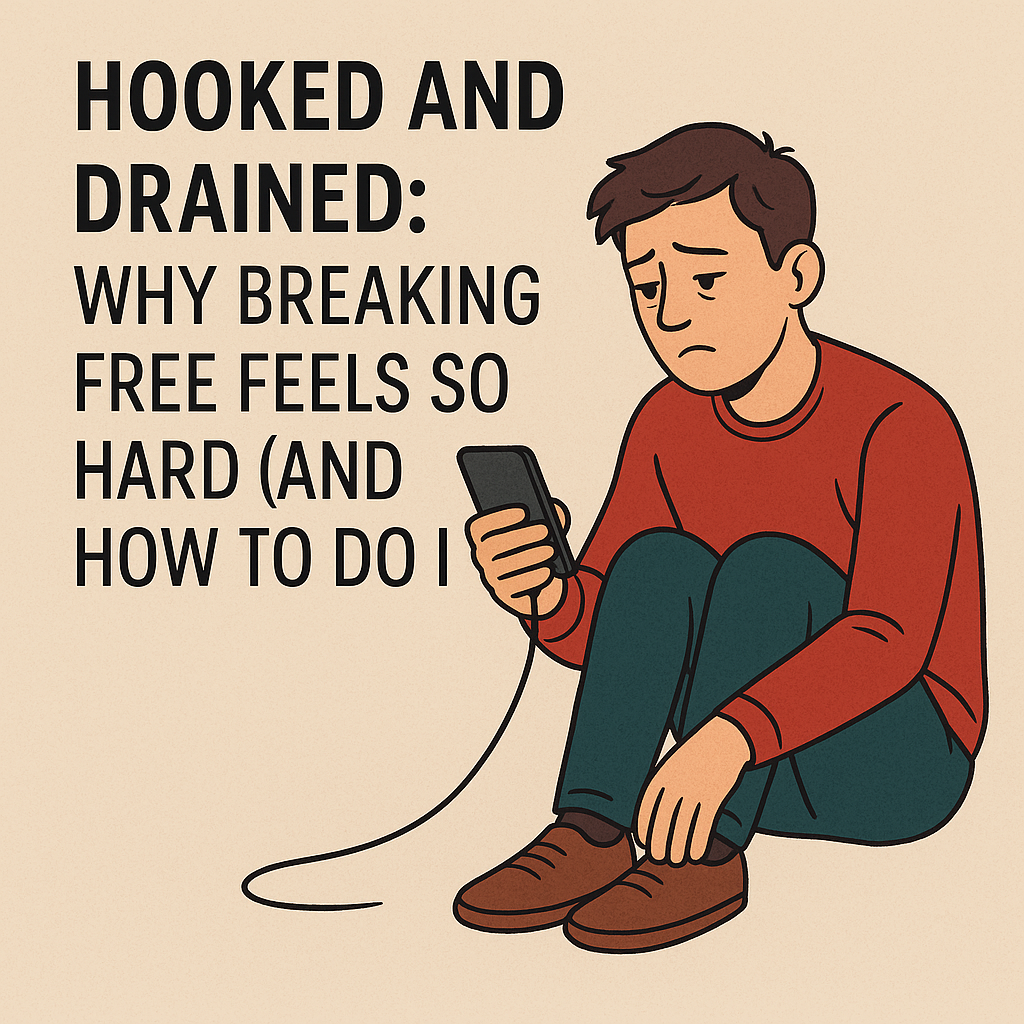
Hooked and Drained: Why Breaking Free Feels So Hard (and How to Do It)
Most people think they’re in control of their time online, but the truth is, many are caught in the invisible web of hooking habits. Whether it’s endless scrolling, compulsive checking, or losing track of hours in front of a screen, these patterns slowly take over — and breaking free feels harder than it should.
The scary part? Hooking isn’t always obvious. It can sneak into your daily routine disguised as “just relaxing” or “staying updated.” Before you know it, your evenings, mornings, and even moments of quiet are filled with this constant pull.
The Science Behind Hooking
Modern platforms are designed to keep you engaged for as long as possible. According to research on digital dependence, our brains release dopamine — the “feel-good” chemical — when we get notifications, likes, or new content. This reward loop reinforces the habit, making it harder to stop.
Algorithms play a huge role too. As reported by the BBC in how algorithms shape your online behavior, the content you see is carefully chosen to keep you hooked. It’s not an accident that you “just happened” to find another video or post that grabs your attention.
Why Hooking Feels Like a Trap
Hooking habits don’t just waste time — they drain your focus, reduce productivity, and can even harm your mental well-being. The constant stimulation leaves you restless, distracted, and craving more. It’s like eating junk food for your brain — satisfying in the moment, but damaging over time.
Over weeks or months, these habits can affect your relationships, work performance, and ability to enjoy simple offline pleasures. If you’ve ever felt guilty for spending “just a few minutes” online that turned into hours, you’re not alone.
Breaking the Hooking Cycle
The first step to breaking free is awareness. Track how much time you spend on certain apps or websites — you may be shocked. Next, set intentional boundaries. This could mean deleting certain apps from your phone, turning off notifications, or scheduling “screen-free hours” each day.
You can also replace hooking activities with more fulfilling ones. Read a book, take a walk, learn a skill — anything that gives your brain a different type of reward. Harvard Health offers practical tips for reducing screen time that can help you create a healthier balance.
Hooking in Disguise
Sometimes hooking hides under “productive” activities — checking work emails at midnight, reading the news for hours, or binge-watching “educational” videos. While these might seem harmless, they still feed the same addictive loop.
Be honest with yourself about why you’re engaging with the content. Is it truly helping you, or is it just another way to stay hooked?
From Awareness to Action: Your Next Step
You don’t have to quit technology altogether to live a balanced life. But breaking free from unhealthy hooking habits will give you more time, energy, and mental clarity for what truly matters.
If you’re ready to take control, start small — maybe a single hour a day without your phone. Build from there. Change doesn’t happen overnight, but each step you take is a win.
When a Quick Check Turns Into Hours
I remember a friend who thought she was “just checking” her phone for a few minutes. Hours later, she was still scrolling, feeling drained yet unable to stop. That’s when she realized the subtle pull was stronger than she ever imagined—and change was necessary.
For more insights on building better daily habits, check out our post on simple life management strategies and our guide to living well in a digital world.
Enjoyed this post? Share it with a friend and start the conversation about healthier online habits.